
By Gabriela Afanador
Monday 9, March 2026
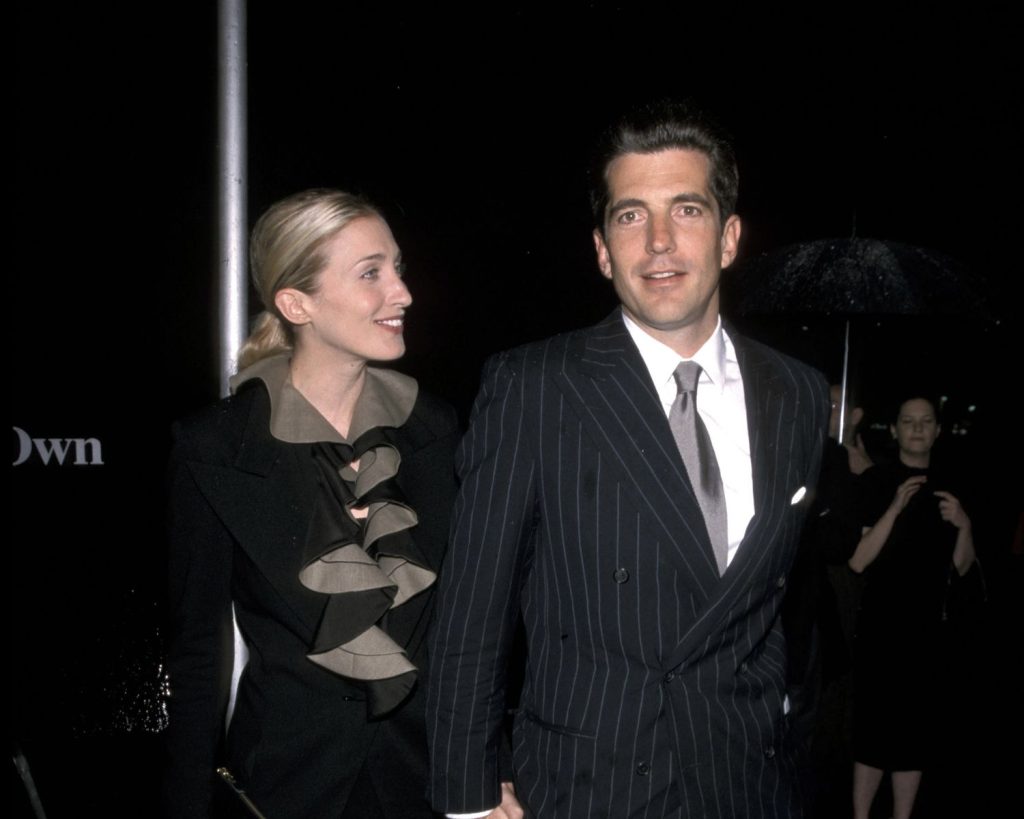
Credit: Ron Galella/ Ron Galella LTD
There is a very specific kind of 1990s confidence that is returning right now. Not the loud kind. Not the glitter kind. The kind that looks like control. The kind that makes people lean in because nothing is being handed to them. That is why a dating book from 1995 and a modern TV portrayal of Carolyn Bessette Kennedy suddenly feel like they are speaking to each other across time.
The book is The Rules, a phenomenon that did not just sell well, it shaped a whole era of romantic behavior. The show is Love Story, which turns the early courtship between John F. Kennedy Jr. and Carolyn into a tight psychological dance that is both romantic and strategic. One is a manual. The other is a dramatization. But the emotional language is the same. Distance. Discipline. Mystery. And the idea that the person who appears to need less has more power.
The key is not whether Carolyn literally followed the book. The key is that the version of Carolyn we cannot stop watching moves like a Rules Girl, and that reveals something uncomfortable about what still works on people.
When The Rules landed in the mid 1990s, it arrived like a corrective. Many women were navigating a dating landscape that felt casual, unstructured, and emotionally expensive. The book responded by promising structure. It offered a strict system designed to reduce uncertainty and increase commitment. It argued, in traditional terms, that pursuit is part of desire, and that if the pursuit disappears, interest fades. The solution was to become the challenge.
The Rules Girl is the book’s ideal woman. She is composed. She has a full life. She does not chase. She does not rush to prove she is easy to keep. She is not rude, but she is not overly available. Her charm is not loud, it is withheld. The book turns that into a list of behaviors that almost feel like choreography. Do not initiate. Do not call first. Do not rush to return calls. End phone conversations early. Let him come to you. Keep your schedule. Look polished even when you are running errands, because opportunity can happen anywhere.
Read now, the advice can feel dated, especially through a modern lens that values equality and directness. But that is exactly why the book is fascinating. It captures a tension that still exists. The desire to be respected and pursued, without becoming a performer. The desire to feel chosen, without feeling like you begged to be chosen.
Now place that framework next to Love Story. The show’s Carolyn is written with a kind of self possession that feels almost radical in celebrity romance. She does not melt into JFK Jr.’s charm. She does not treat his attention as a prize. She treats it like a test.
In the series, her first move is not seduction. It is refusal. She declines to give him her number and directs him to a gatekeeper. It is a small scene, but it changes the entire dynamic. A man who is used to the world bending toward him is forced to do the work of ordinary pursuit. He must locate her through her workplace, reach out again, tolerate silence, and accept that access to her is not automatic.
This is the core emotional mechanism behind hard to get. It is not cruelty. It is controlled scarcity. The show makes the logic visible. Carolyn becomes the only woman in his orbit who does not behave like his orbit matters. That is exactly why he cannot stop circling her. Her distance becomes a mirror. It tells him something about himself. It also tells him that she is not easily absorbed into his mythology.
And this is where the book and the show line up almost too neatly. The Rules says do not meet him halfway. The show’s Carolyn makes him cross the entire distance. The Rules says do not be overly responsive. The show’s Carolyn lets calls ring. The Rules says your time is valuable. The show’s Carolyn ends interactions cleanly and returns to her life. The Rules says be unlike the others. The show builds her as the rare figure who refuses to be impressed.

The uncomfortable truth is that some of The Rules strategies map onto basic human psychology, not just gender stereotypes. People value what they work for. People want to feel chosen, but they also want to feel they earned something. In a world of constant access and constant communication, scarcity reads as value.
Carolyn’s power in the show is not only beauty or style. It is restraint. She speaks less. She reacts less. She reveals less. In an era where most people are trained to over explain, her silence becomes a form of presence. The show frames this as self protection and self respect, not as manipulation.
If The Rules is about discipline, the shadow side is performance. The book can encourage women to suppress natural behavior, hide vulnerability, and treat intimacy as something to ration. It can turn connection into a power contest, and it can reward relationships built on anxiety rather than mutual comfort.
The show actually hints at that cost. A woman who wins by withholding can end up living inside that withholding. Mystery can become isolation. Control can become armor. The Rules Girl archetype is powerful, but it is also fragile if it depends entirely on being unreadable.
The strongest way to understand Carolyn is not as a manipulator or a dating strategist. It is as a woman negotiating a terrifying level of public attention. The Kennedy world was not just a boyfriend. It was a machine. Entering it meant losing anonymity, absorbing scrutiny, and being interpreted constantly. In that context, restraint becomes not only romantic strategy but survival strategy.
Her style supports this reading. She dressed like someone who wanted control of her outline. Clean lines. Neutral tones. Minimal fuss. She rarely looked like she was trying to signal status. Her clothes were quietly expensive, but more importantly, they were quietly protective. Long coats that create distance. Sunglasses that create a barrier. Simple silhouettes that do not invite over interpretation. A wardrobe that says you can look at me, but you cannot fully access me.
If you strip away the gender politics and the manipulative edge, there is a modern version of the lesson that still holds. Have a life that does not collapse around a new person. Keep your schedule. Keep your friendships. Keep your standards. Let someone show effort consistently, not just with words. Do not confuse intensity with intention. Do not abandon your boundaries because attention feels flattering.
In other words, the best part of The Rules is not the pretending. It is the self respect. Love Story makes that clearer. The Carolyn who captivates is not the one playing games. It is the one who refuses to abandon her identity, even when the most famous last name in America is inviting her to dissolve into it.
The reason this 1990s book and this 2026 TV portrayal feel linked is that they both revolve around the same currency. Restraint. Not as coldness, but as control of access. In a culture that rewards oversharing, restraint reads as luxury. In a dating landscape that often feels fast and disposable, restraint reads as value.
Whether you admire it or reject it, the phenomenon is telling. We are living in a moment where the most magnetic move is not to chase, not to explain, not to be instantly available. The Rules made that a doctrine. Love Story makes it a narrative. And Carolyn Bessette Kennedy, real or dramatized, becomes the face of the idea that still unsettles people the most. Sometimes the person who wins is simply the one who does not rush to be owned.