
By Gabriela Afanador
Saturday 16, May 2026
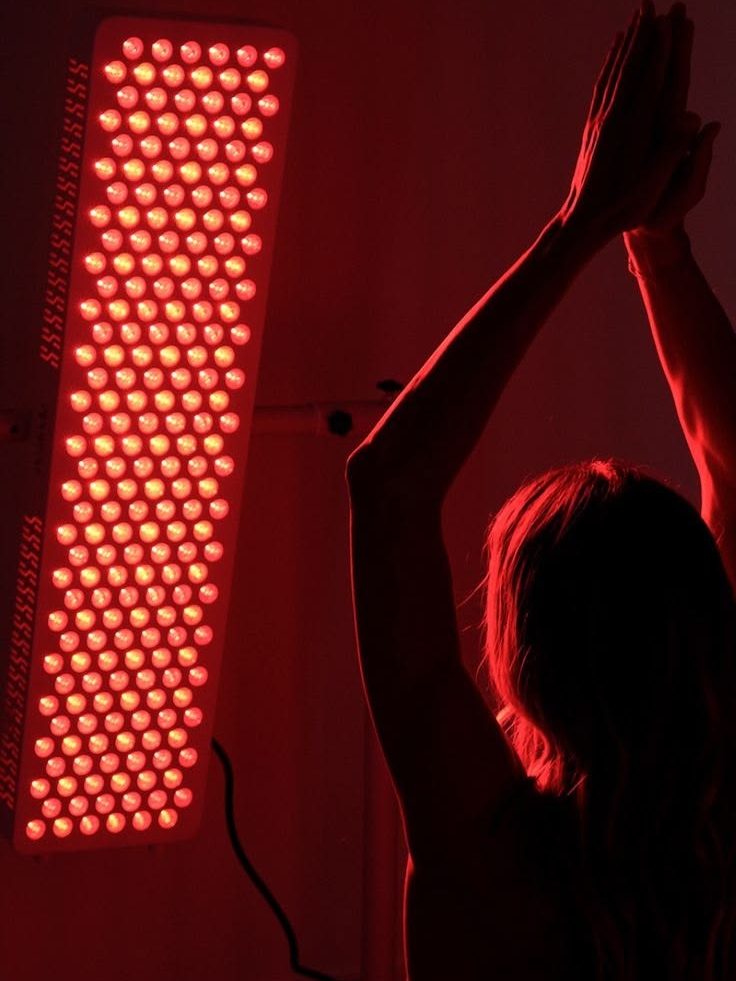
Red light therapy has spent the better part of the last decade migrating from clinical rehabilitation settings into the mainstream wellness conversation, and that migration has produced both genuinely useful information and a remarkable volume of noise. The technology itself is real, the research behind it is substantial, and the physiological mechanisms it operates through are well understood at the molecular level. What is less straightforward is the consumer market that has grown up around it, a landscape populated by devices ranging from genuinely effective clinical-grade panels to repurposed agricultural grow lights being sold with fraudulent specifications to people who have no way of knowing the difference. Understanding what red light therapy actually is, what it does, and why the quality of the device you use determines whether any of it means anything is the only way to engage with this practice intelligently, and the difference between doing it right and doing it wrong is significant enough to be worth the time it takes to understand.
At its most fundamental level, red light therapy, known clinically as photobiomodulation, is the application of specific wavelengths of visible red and near-infrared light to living tissue with the purpose of triggering measurable biological responses at the cellular level. Unlike high-powered lasers that destroy or cauterize tissue through heat, photobiomodulation operates entirely on photochemical principles, meaning the light energy is absorbed by the cell and converted into chemical energy without generating any tissue-damaging warmth. The primary target of this process is a protein complex called cytochrome c oxidase, which sits within the mitochondria, the energy-producing structures inside every cell in the body, and functions as the final step in the respiratory chain responsible for generating adenosine triphosphate, the cellular fuel that powers virtually every biological process the body performs. Under conditions of physiological stress, fatigue, inflammation, or injury, the activity of cytochrome c oxidase is suppressed by the binding of nitric oxide to its active sites, which restricts oxygen flow and dramatically reduces ATP production. When photons in the specific red and near-infrared wavelength ranges reach the mitochondria, they trigger the release of that inhibitory nitric oxide, restore the flow of electrons through the respiratory chain, and produce a cascade of downstream effects including elevated ATP synthesis, controlled bursts of reactive oxygen species that activate key regenerative transcription factors, and the stimulation of calcium channels that drive cell signaling, migration, and growth factor production.
The Wavelengths and What They Do
The biological effectiveness of red light therapy is entirely wavelength-dependent, and this is the detail that separates a device worth buying from one that is not. Human tissue has what researchers call an optical window, a range of wavelengths spanning approximately 600 to 1100 nanometers within which light can penetrate the skin effectively because the major tissue absorbers, water, melanin, and hemoglobin, do not significantly block it. Within that window, visible red light in the 630 to 670 nanometer range penetrates to a depth of roughly two to five millimeters, reaching the epidermis and dermis where it stimulates dermal fibroblasts to produce collagen and elastin, accelerates wound healing, and addresses surface-level skin concerns including fine lines, uneven texture, and inflammation. Near-infrared light in the 810 to 850 nanometer range penetrates considerably deeper, reaching twenty to forty millimeters below the skin surface into the muscle tissue, joint capsules, peripheral nerves, and underlying bone, making it the relevant wavelength for muscle recovery, joint inflammation, neuropathic pain, and any indication requiring deep tissue intervention.
There is also a wavelength range that does nothing, which is as important to know as everything else. The band between approximately 700 and 780 nanometers falls into what researchers call a trough in the absorption spectrum of cytochrome c oxidase, meaning photons in this range simply fail to trigger the conformational changes in the protein that initiate the therapeutic cascade. A device emitting light in this range is delivering light that the target molecule cannot use, regardless of how it is marketed or what its specifications claim.
What the Research Actually Shows
The clinical evidence for photobiomodulation is considerably more robust than the wellness industry’s embrace of it might suggest, spanning randomized controlled trials, systematic reviews, and in vitro models across dermatological, musculoskeletal, neurological, and oncological applications. For skin rejuvenation specifically, a clinical trial evaluating twice-weekly red LED mask therapy in healthy volunteers aged 45 to 70 over three months produced results that are difficult to dismiss: a 62.1 percent increase in dermal density confirmed via high-frequency ultrasound, a 31.3 percent improvement in skin firmness, a 16.7 percent reduction in facial laxity, and a 62.6 percent decrease in excess sebum production, with structural improvements remaining stable for up to thirty days after therapy was discontinued, demonstrating that the changes represent genuine tissue remodeling rather than temporary surface effects. These outcomes trace directly back to the in vitro findings showing that irradiation with a combination of 640 nanometer red and 830 nanometer near-infrared light at low power density significantly upregulates the gene expression of type I and type III collagen, elastin, and the enzyme responsible for elastic fiber cross-linking in human dermal fibroblasts, alongside measurable increases in mitochondrial ATP synthesis in those same cells.
For athletic recovery and muscle performance, a meta-analysis of fourteen randomized controlled trials examining the effects of photobiomodulation on high-level volleyball and football players found a significant reduction in serum creatine kinase levels, a key biomarker of muscle damage and membrane degradation, of an average of 45.37 units per liter compared to sham treatment, alongside improvements in exercise volume and endurance. Pre-conditioning with near-infrared light before exercise has been shown to reduce post-exercise lactic acid accumulation by 24 percent, protect mitochondrial structures from exercise-induced oxidative damage, and accelerate the rate of muscle regeneration, making it a genuinely useful tool for anyone engaged in regular intense physical training rather than simply a recovery aid. The anti-inflammatory and cytoprotective capacity of near-infrared light has also been validated in clinical oncology: a multicenter randomized placebo-controlled trial treating head and neck cancer patients undergoing intensity-modulated radiotherapy with a dual-wavelength near-infrared laser demonstrated a 49 percent reduction in grade two to three acute radiation dermatitis compared to standard skin care, confirming that the tissue-protective effects of photobiomodulation operate at a level of biological significance that extends well beyond the cosmetic.
What to Actually Buy and What to Avoid
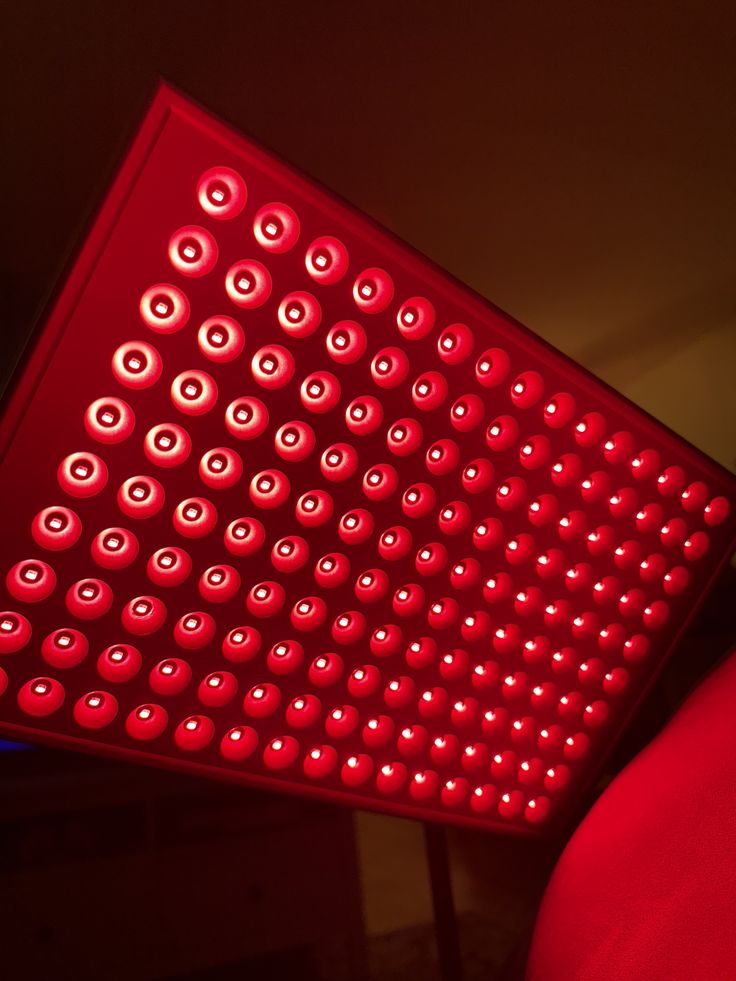
The consumer device market for red light therapy is where the science and the commercial reality diverge most dramatically. The central deception in the cheap device market operates through inflated wattage claims: a panel advertised as 300 or 500 watts is citing the theoretical maximum power of its LED chips at absolute thermal limits, not the actual electricity the device draws or the optical energy it delivers to the skin. In clinical engineering, LEDs are driven at 40 to 60 percent of their maximum capacity to prevent overheating and degradation, meaning a panel marketed as 500 watts typically consumes 60 to 80 watts of actual power, and the irradiance that reaches your skin at a realistic treatment distance is what determines whether the dose is therapeutically meaningful at all.
The second major deception involves how irradiance is measured. Budget manufacturers measure power density directly against the LED panel at zero distance and advertise that number as the device specification. Because light intensity drops rapidly with distance, a surface reading of 200 milliwatts per square centimeter becomes 40 to 60 milliwatts at the standard six-inch treatment distance, a reduction of 70 to 80 percent that can fall below the activation threshold for cytochrome c oxidase entirely. Independent laboratory testing has found that the majority of mass-market panels fail to meet their own advertised irradiance specifications at realistic treatment distances, and a significant percentage emit wavelengths that deviate substantially from their claimed values, which reduces biological effectiveness by as much as 35 percent at the target chromophore.
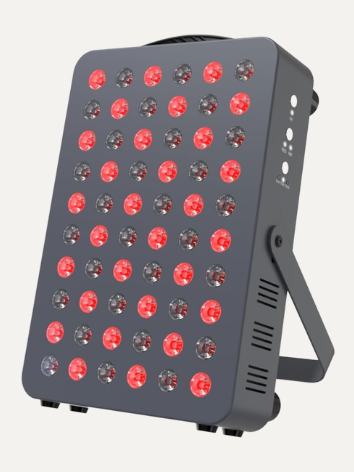
Hooga Red Light Therapy Panel
What to look for is straightforward: verified irradiance of at least 50 milliwatts per square centimeter at six inches confirmed by independent testing, precise wavelengths of 660 and 850 nanometers, flicker-free circuitry, zero or background-level electromagnetic field emissions, and a meaningful warranty. The Hooga HG300 checks all of these boxes and is the device I personally use, moving it sequentially across different body areas to cover everything from face to legs in a single session. At $199 with a three-year warranty and lab-verified specifications, it is the entry point I would recommend to anyone starting out, reliable enough to deliver genuine results without requiring a significant financial commitment before you know whether the practice works for you.