
By Gabriela Afanador
Thursday 2, April 2026
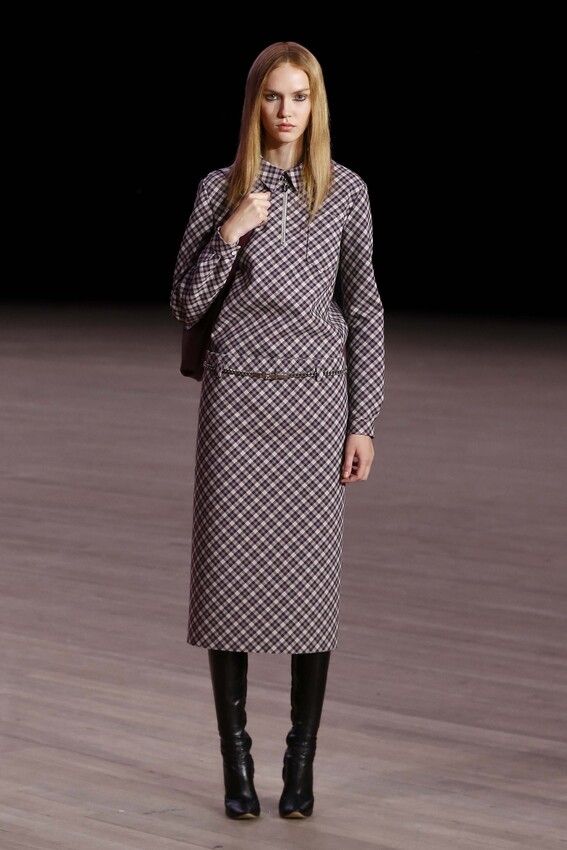
Photo: firstVIEW
Marc Jacobs approached Fall Winter 2026 with much more restraint than excess. Instead of relying on oversized theatrical proportions, he built the collection through control, tension, and deliberate imbalance. The clothes felt strict, intelligent, and emotionally charged, with silhouettes that often resisted traditional ideas of ease or flattery. Rather than following the body softly, many looks reshaped it into something straighter, squarer, and more architectural.
The opening established that mood clearly. Dark knitwear was paired with structured skirts that gave the figure a compact, sculptural presence. These were not soft, casual sweater looks. The knits were controlled and dense, often tucked into rigid lower pieces that flattened the waist and emphasized a column like line. That combination of softness in fabric and firmness in shape became one of the collection’s main strengths.
Tailoring pushed that idea further. Jackets were sharp and disciplined, but they did not celebrate the body in the usual way. Instead of narrowing neatly at the waist, they often held a straighter frame, creating a more abstract outline. Worn with skirts, shorts, or abbreviated lower pieces, the tailoring felt polished but slightly off center, which made it more modern. The collection repeatedly used the waist as a point of disruption rather than beauty. Some looks extended the torso through low waistlines, while others cut across it with rigid bands that interrupted the figure.
Outerwear gave the lineup some of its strongest moments. The coats felt protective, reserved, and exact, with long lines and a certain emotional distance. They framed the body rather than simply covering it. Some of the most effective outfits paired these severe coats with shorter hems underneath, creating a sharp contrast between concealment and exposure. That tension gave the looks energy. A strong coat over a brief skirt or short created an image that felt both controlled and vulnerable at once.
As the show progressed, the textures began to shift. The early density of knits and structured fabrics gradually opened into lighter, more transparent materials. This kept the collection from feeling too severe from start to finish. Jacobs introduced sheerer skirts, smoother surfaces, and more reflective finishes, but he never let the collection lose its discipline. Even when the fabrics became lighter or more decorative, the silhouettes remained controlled.
The shorter pieces were especially important in this middle section. Mini skirts and reduced shorts added abrasion to the lineup and sharpened the tailoring around them. Styled with dense tights, leather, or structured jackets, they did not feel playful. They felt exact and urban. Leather also helped intensify that mood. Used in compact jackets and separates, it brought a cleaner, harder surface that made the silhouettes look even more decisive.
Color & texture
Color was handled with the same restraint as the construction. Much of the collection was grounded in black, gray, and muted shades that let the cut of the clothes stand out first. Brighter tones appeared more selectively, which made them feel sharper and more intentional. Pinks, blues, and more vivid accents broke through the darker foundation without softening the overall mood. They brought tension rather than sweetness.
Texture did much of the storytelling. Dense knits, papery skirts, firmer wools, and cleaner leather surfaces created a wardrobe that felt sculpted rather than fluid. When silkier fabrics, sheerness, or embellishment entered later, they worked as interruptions within that structure. That is what made the progression effective. The collection began with severity, then slowly allowed in more light, shine, and fragility, while still holding onto its controlled line.
The later looks introduced more glamour, but in a very measured way. Sequins, brighter skirts, and more decorative elements appeared without dissolving the collection into spectacle. Jacobs kept the shapes clean, so even the more dressed up outfits still felt disciplined. That balance was one of the strongest parts of the show. The clothes became more luminous, but never lost their restraint.
What made Marc Jacobs Fall Winter 2026 compelling was its confidence in editing. The collection did not depend on excess to make an impression. Its strength came from proportion, material, and the subtle way each outfit shifted the body away from the expected. It offered a more adult, more controlled kind of elegance, built through tension rather than softness. That is what gave the collection its depth and made it feel modern