
By Gabriela Afanador
Sunday 13, September 2026
Joseph Altuzarra showed his Spring/Summer 2027 collection on the morning of September 12 inside the Woolworth Building in lower Manhattan, the same neo Gothic skyscraper that houses the brand’s own design studio. The space brought soaring vaulted ceilings, detailed mosaic tile work, and polished marble arches into the show itself, giving the whole thing a sense of old New York permanence before a single look came out. Composer Jennifer Rouse built an original score for the show that moved from quiet, suspended tones into something more rhythmic as the show went on, and the sound carried through that stone hall in a way that made every rustle of taffeta and every footstep on the marble register clearly. Guests found a book waiting at their seats too, a history of Casa Susanna, the mid century retreat that inspired the collection, giving the audience context before the first model even walked.
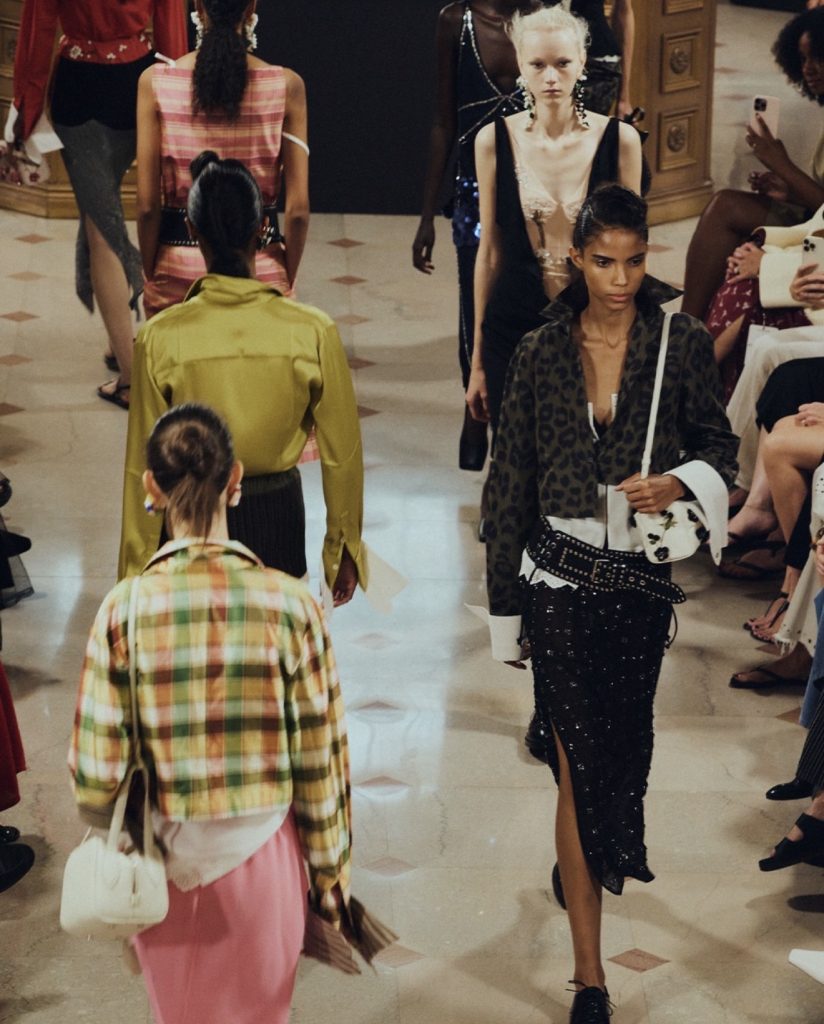
Photo via @Altuzarra on Instagram
The Collection
Altuzarra built this collection around Casa Susanna, a quiet retreat in the Catskills that operated through the late 1950s and 1960s, where transgender women, gender nonconforming people, and cross dressing men could shed their public, corporate menswear and live openly as themselves for a while, away from the risks that came with doing so anywhere else. Altuzarra came across the photographs from this place through an exhibition at the Met, and what struck him was warmth, women drinking tea on porches, arranging flowers, helping each other with a hemline, the small, ordinary rituals of getting dressed and feeling at home in your own skin. That tension between the buttoned up, corporate menswear these people wore during the week and the soft, expressive femininity they got to step into at the retreat became the throughline for the whole show, structured tailoring giving way, piece by piece, to something much more open.
That idea shaped the whole pacing of the runway. The show opened firmly in mid century menswear territory, boxy leather jackets, crisp poplin shirting, structured skirts paired with matching caps, all in a restrained, corporate palette of charcoal, navy, and white. From there, things gradually came undone, buttons left open, belts worn loose and crooked, cardigans slung slightly off the shoulder, until the second half of the show moved into soft satin, sheer knits, and lace, undergarments becoming outerwear rather than something hidden underneath it. Altuzarra closed the show holding hands with his two young daughters, a personal note that connected naturally to what the collection had been about.
The Clothes
Tartan check ran through a large part of this collection, a print that’s been showing up across a lot of runways this season, and here it served a specific purpose, bridging the more masculine, country club side of the story with the fuller, more feminine circle skirts worn alongside it. The opening stretch of the show leaned heavily on that tension, a boxy Harrington jacket over a large pleated taffeta skirt, structured pencil skirts paired with matching caps, tailoring still rooted in the collection’s corporate starting point. The taffeta used across these opening looks carries real weight and body on its own, enough that the full circle skirts hold their shape without any internal boning underneath, which is part of why those early looks read as so architectural against the softer, closer fitting jackets worn over them. Some of the earliest pieces lean more into volume than precision, an oversized leather jacket, one particularly loose dress, which reads as the deliberate, buttoned up starting note the collection was built to unravel from over the course of the show.
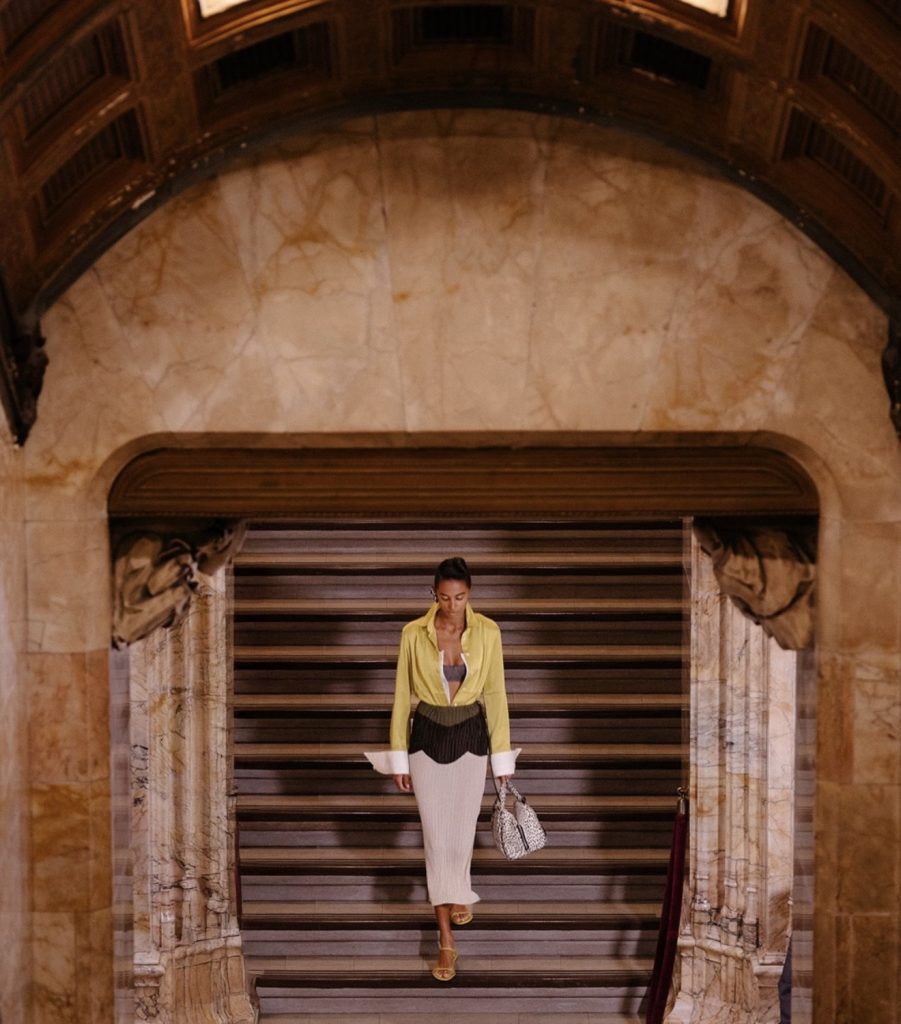
Photo via @Altuzarra on Instagram
The middle stretch of the show opens things up, both in silhouette and in fabric. One standout look pairs a tailored, bright yellow green satin shirt with a patterned skirt done in cream and deep, dark green, with a grayish blue bra peeking through the open collar, a small, striking contrast against that warm yellow green satin. Elsewhere in this section, tailored wool suiting has been deliberately slashed open along its seams and chest panels to reveal delicate floral embroidery stitched underneath, so a formal, corporate looking jacket parts to show something soft and decorative hidden inside it, a technique that runs through several pieces in the collection and gives real physical weight to the whole idea of concealment and reveal at the center of the story. Cotton jersey tops get a similar treatment, sliced open to expose lace foundations beneath, turning what could have been simple damage into a considered, intentional detail. From there the palette moves through more color, pinks and reds mixed in against the greens, oranges, and golds already established, before settling into a quieter, more muted stretch built around large trenches and full, flowing skirts, all cinched with the oversized, slightly undone belts that recur throughout the collection. A soft white dress paired with a rough, grungy black belt appears twice in the show, in different color moments, and both times that pairing of something delicate against something utilitarian lands well. Two of the knit looks stand out for their zebra print pattern, which is not printed onto the surface but actually woven directly into the structure of the knit itself, with fine metallic thread running through the yarn so the whole pattern catches light as the fabric moves, giving the animal print real depth and a kind of shimmer that a flat print could never achieve.
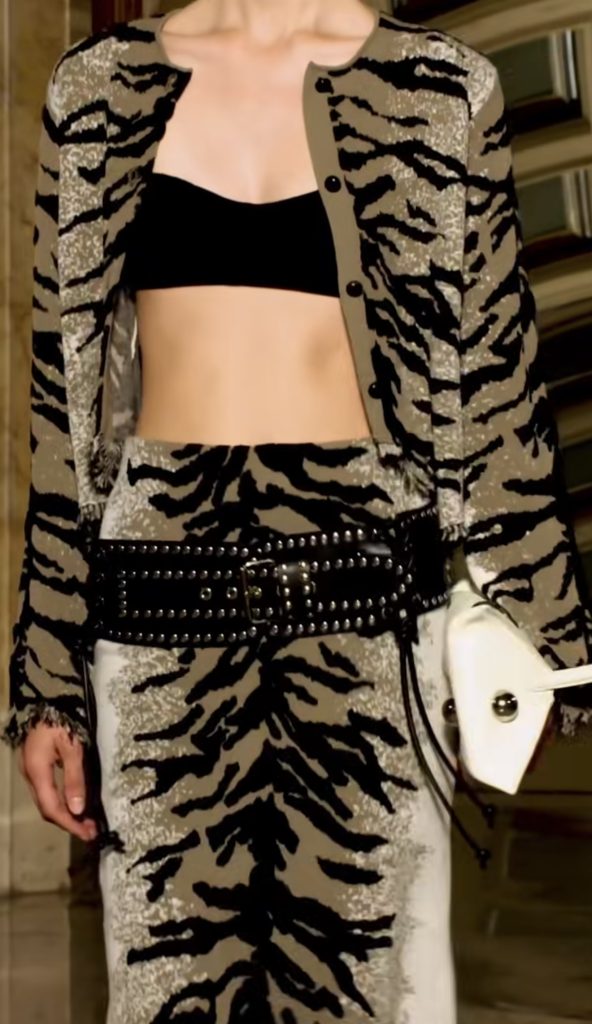
Photo via @Altuzarra on Instagram
The tailoring sharpens again further into the show, with fuller, more fluid skirts carrying real movement, paired against much larger jackets finished with cuffs built to look almost like a separate shirt underneath. That same silhouette, a soft, flowing skirt against a much bigger jacket, repeats a few times through this stretch, each in a slightly different color combination, black paired against warm orange being one of the strongest versions of it. Toward the end of the collection, sequins return, showing up on a couple of sheer dresses, one a pale blue sheer piece finished with sequin detail, another in a soft yellow green sheer fabric covered in silver sequins, both landing as some of the more delicate moments in the show, the crystal work along the hems fading gradually into denser clusters of sequins rather than stopping abruptly, which gives the fabric a real sense of graduated light rather than a flat, evenly sequined surface.
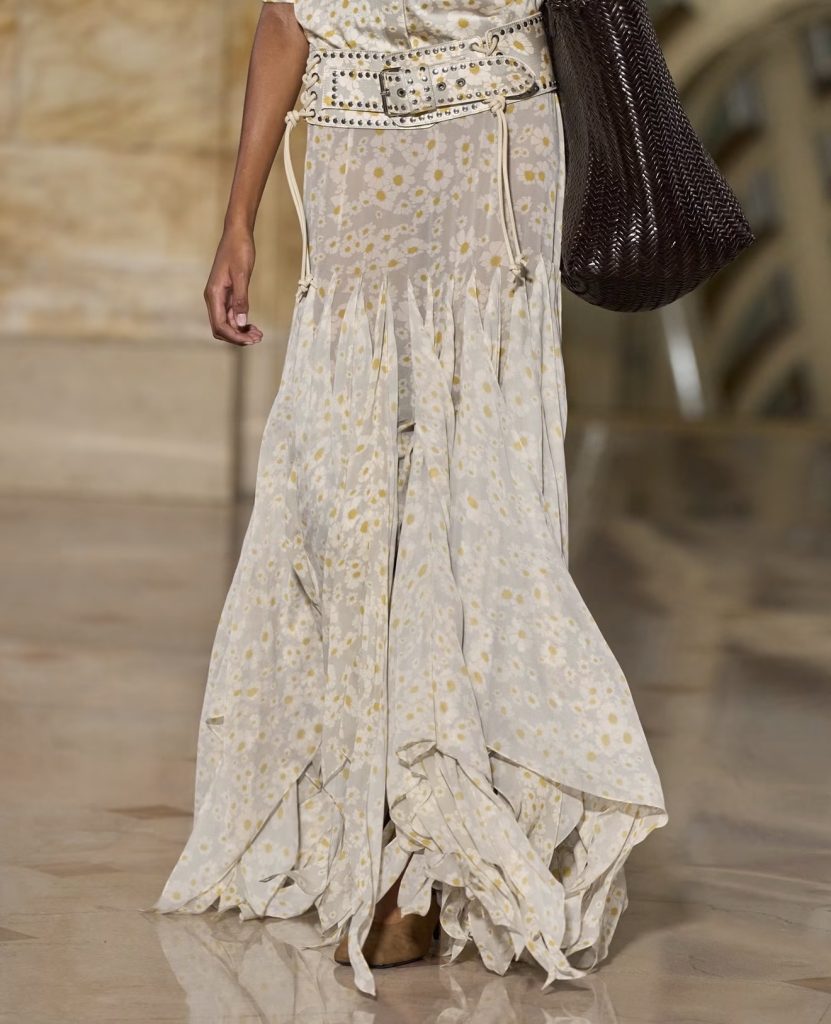
Photo via @Altuzarra on Instagram
The final stretch of looks all build off a similar floral printed dress, cut in a soft, springlike print running the full length of the garment, some finished as a single dress, others separated into a floral shirt worn over a matching floral skirt. The fabric in this closing section moves noticeably differently from the crisp taffeta at the beginning of the show, hand finished hems cut unevenly so the fabric flutters unpredictably with each step rather than falling in one clean line. One of these, paired with a belt made from that exact same floral fabric and a large woven bag, carries a boho feeling, built around ease and personality, and it stands as one of the strongest closing looks in the whole show.
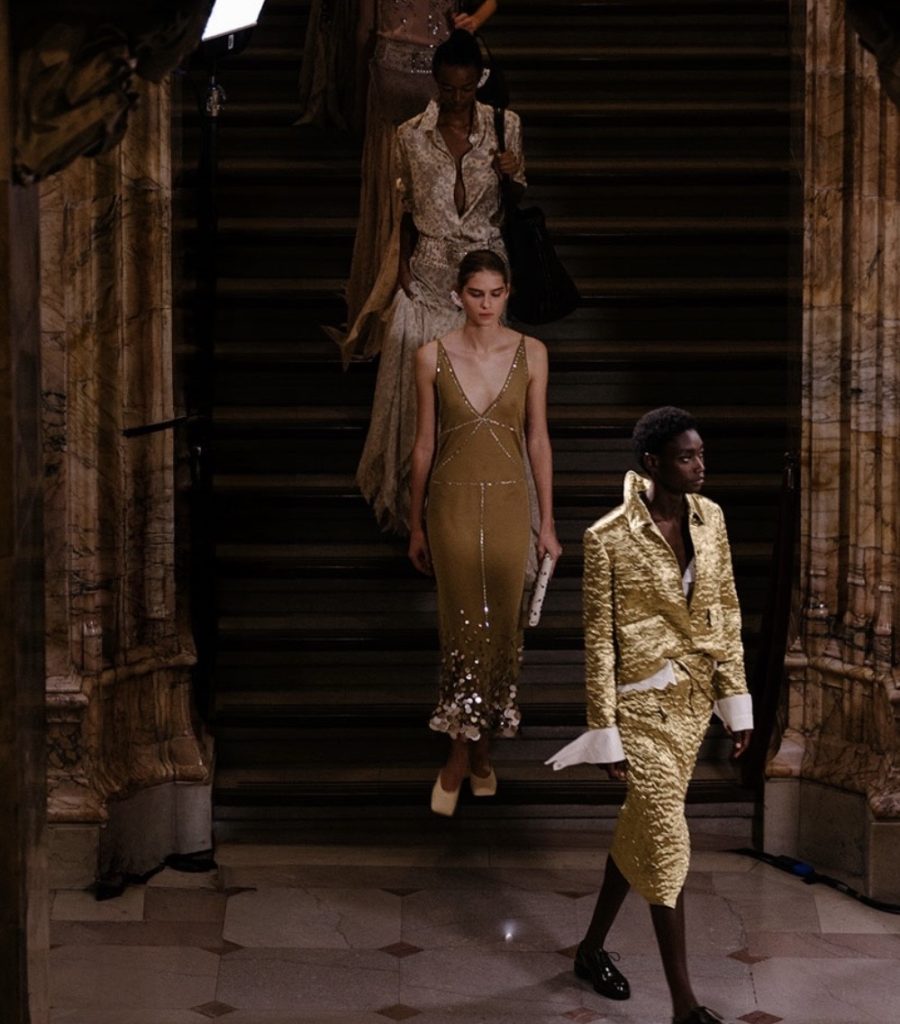
Photo via @Altuzarra on Instagram
Beyond the clothes themselves, the styling carried a lot of the collection’s meaning. Wide leather belts studded with metal grommets showed up throughout, worn loose and slightly askew rather than cinched tight, matching the undone, unbuttoned ease running through the second half of the show. Detachable menswear collars and cuffs layered under knitwear gave a small, physical reminder of the corporate uniform the collection was working against, and the bra and skirt pairings that showed up across several looks were handled like an actual morning ritual, satin and lace peeking out from under a half buttoned shirt, private rather than performed. Footwear moved the same way the clothes did, sharp pointed pumps anchoring the tailored suiting early on, softer woven leather sandals showing up as the collection moved into its later, more relaxed stretch, so even the shoes carried the same arc from formal to easy that ran through everything else.
The Close
Taken as a whole, this collection built its case slowly and carefully rather than all at once, and that pacing is really the thing worth sitting with after the fact. Every fabric choice seems to have been picked specifically to support the larger idea running through the show, the taffeta that holds its own architectural shape without any hidden structure underneath it, the wool suiting slashed open to reveal something soft and embroidered hiding inside it, the knit patterns woven directly into the yarn rather than sitting flat on the surface. None of that reads as decoration for its own sake. Each of those choices ties back to the same central idea, that what looks buttoned up and formal on the outside can hold something completely different underneath, and that bringing that hidden part into view is not a performance but something closer to relief.
There is a real generosity in how much craft went into translating that idea into actual, wearable garments rather than leaving it as a concept on a mood board somewhere. The middle stretch of tailoring, where the satin shirts and patterned skirts start doing the most interesting color work, and the closing run of floral looks both stand out as some of the strongest, most fully resolved pieces of design in the whole collection. Altuzarra took a piece of history that could easily have been treated with heaviness or solemnity and instead gave it room to feel warm, lived in, and genuinely joyful, which is a much harder tone to land than something more serious or dramatic would have been. This is a collection that rewards a second look, one where the details keep revealing themselves the longer you spend with it, and it stands as one of the more thoughtful, fully considered bodies of work shown this season