
By Gabriela Afanador
Tuesday 14, July 2026
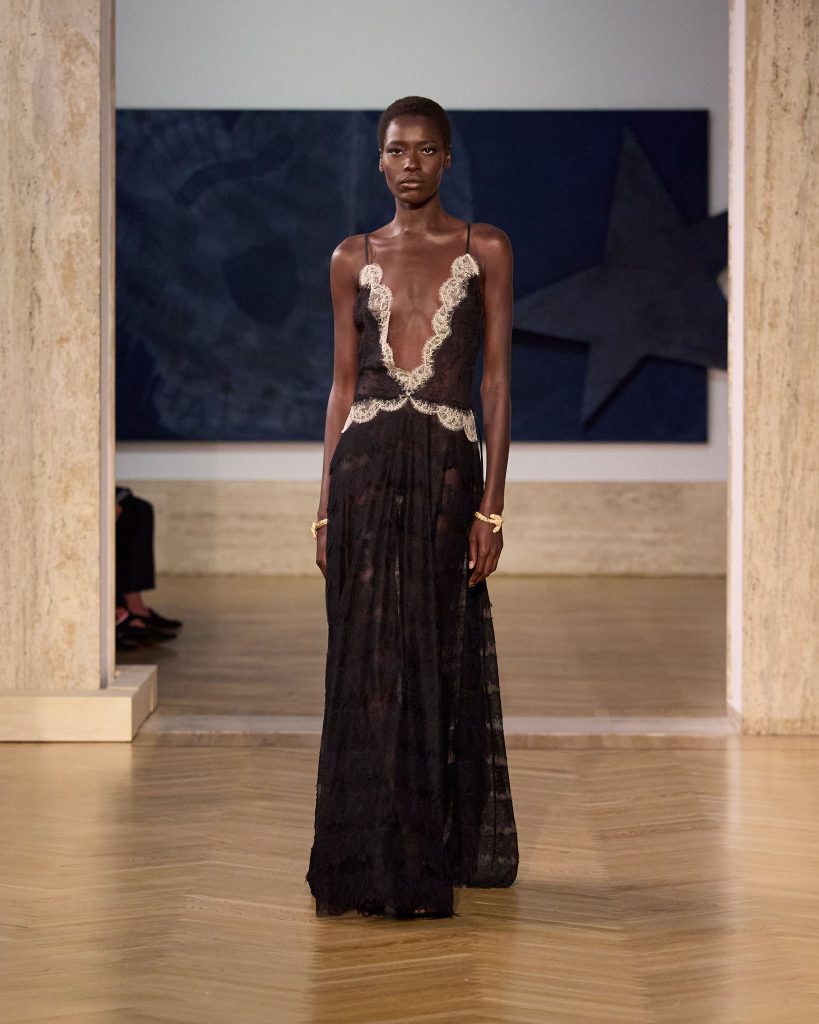
Photo credit: fendi
Maria Grazia Chiuri presented her first haute couture collection for Fendi on July 9th at the Galleria Nazionale d’Arte Moderna e Contemporanea in Rome, and the choice of city was as significant as the choice of venue. Chiuri is Roman, she began her career at Fendi’s ateliers in 1989 before moving to Valentino alongside Pierpaolo Piccioli and then to nearly a decade as creative director of Dior in Paris, and returning to Rome for this debut was a homecoming in the fullest sense, a designer coming back to the city and the house and the craft tradition where she first learned what fashion could do when it begins with material rather than with concept. She said it directly before the show, that Fendi is craft, and the collection was built entirely around that statement, not as a slogan but as a working method, the clothes organized from the fabric outward rather than from a silhouette inward.
Before the show, guests including Sarah Jessica Parker, Jessica Alba, Yara Shahidi, and Monica Bellucci moved through the museum’s marble halls exploring After Steps Through Work, a restaging of a landmark 1985 exhibition that Karl Lagerfeld had organized to mark his twentieth anniversary at the house. The exhibition brought together 180 of his illustrations, 25 of his fur designs, pattern boards pinned with tiny fur fragments arranged into intricate geometric designs, preparatory canvases, and finished coats, a window into the artistry of a creative partnership between Lagerfeld and the five Fendi sisters, Paola, Alda, Carla, Franca, and Anna, that had transformed the house from a Roman furrier into one of the most significant names in Italian luxury. Chiuri’s decision to surround her own debut with this material was a deliberate act of honesty rather than nostalgia, an acknowledgment that the legacy she was entering was formidable and that the most useful thing she could do was to look at it directly rather than pretend it was not there. The exhibition would run from July 10th through October 25th, curated by Maria Luisa Frisa, the two bodies of work occupying the same building for months, Lagerfeld’s furs and sketches and Chiuri’s first couture collection in a sustained conversation about what Fendi has been and what it might become.
The first reference Chiuri had offered publicly about the collection was a clip from Histoire d’Eau, a 1977 short film directed by Jacques de Bascher, the Parisian dandy who was the great love of Lagerfeld’s life and who had no filmmaking experience whatsoever when he made it, which shows in the footage in a way that gives it its particular quality. The film follows a model named Suzy Dyson, dressed head to toe in Fendi, as she wanders through Rome, wandering its streets, descending into its fountains, moving through the city with the ease of someone who belongs there while wearing clothes that belong to a different register entirely, the luxury of the fur and the informality of the city in constant and productive tension. Chiuri described the film as the founding image of her first couture, and the collection that followed it shared the same quality, clothes that did not impose themselves on the wearer or on the space they occupied but that moved with both, enveloping without constraining, present without announcing themselves.
The Collection
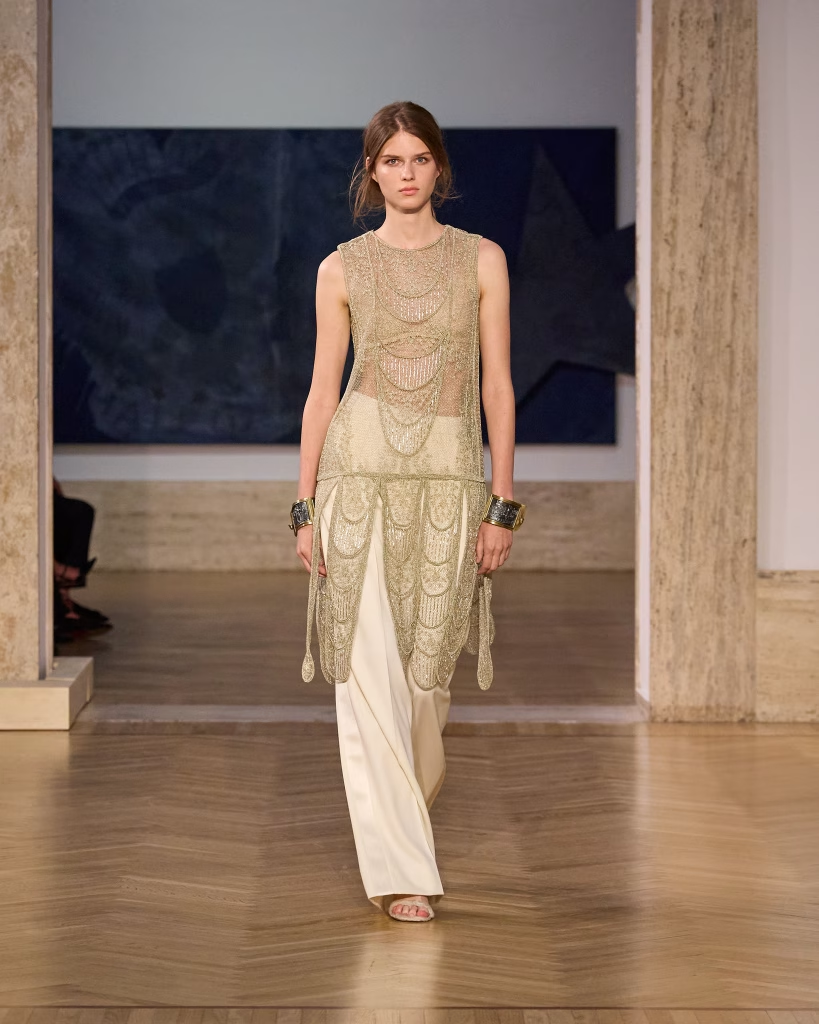
Photo credit: Fendi
The opening look was a caftan in a chevron of pieced black and white stripes, its reference point a dress worn by Emilie Flöge, the reform-dress couturier who was the life companion of Gustav Klimt and who spent her career building a practice around the idea that clothing should free the body rather than restrict it. The connection between Flöge and Chiuri’s philosophy was exact, the caftan’s geometric chevron referencing the reform movement’s visual language while the silhouette itself embodied its central conviction, the garment falling away from the body rather than shaping it, light and fluid and entirely without internal structure. It was a strong and specific opening choice, anchoring the collection in a lineage of women who had used dress as an argument about how women should be allowed to move through the world.
The palette across the collection held almost entirely to black and parchment, the parchment being one of Fendi’s signature materials with a direct connection to the house’s early days as a luggage maker, a color that carries the memory of the house’s material origins and that Chiuri used throughout as both a reference to that history and a foundation for the textural contrasts the collection was built on. Where another designer might have used color to create visual interest, Chiuri created it entirely through surface, leather against lace against velvet against chiffon, each material reading differently in the marble halls of the museum and in relation to the one next to it, the monochrome palette making those material distinctions more visible rather than less.
A georgette dress with inlays of black and white leather strips was the piece that most precisely demonstrated what Chiuri meant when she described Fendi as a house where couture starts from material rather than from shape or construction. The leather strips were set into the georgette with the precision of intarsia woodwork, each strip positioned individually, the resulting garment impossible to produce at scale because every version has to be adapted to the specific body it is being made for, the inlay adjusted to the proportions of the wearer in a way that cannot be standardized or mechanized. Up close during a preview, the precision of the work was described by everyone who saw it as mesmerizing, the kind of craft that becomes more impressive the closer you look at it, which is the opposite of how most fashion is designed and an accurate description of what the Fendi ateliers are capable of when given the right brief.
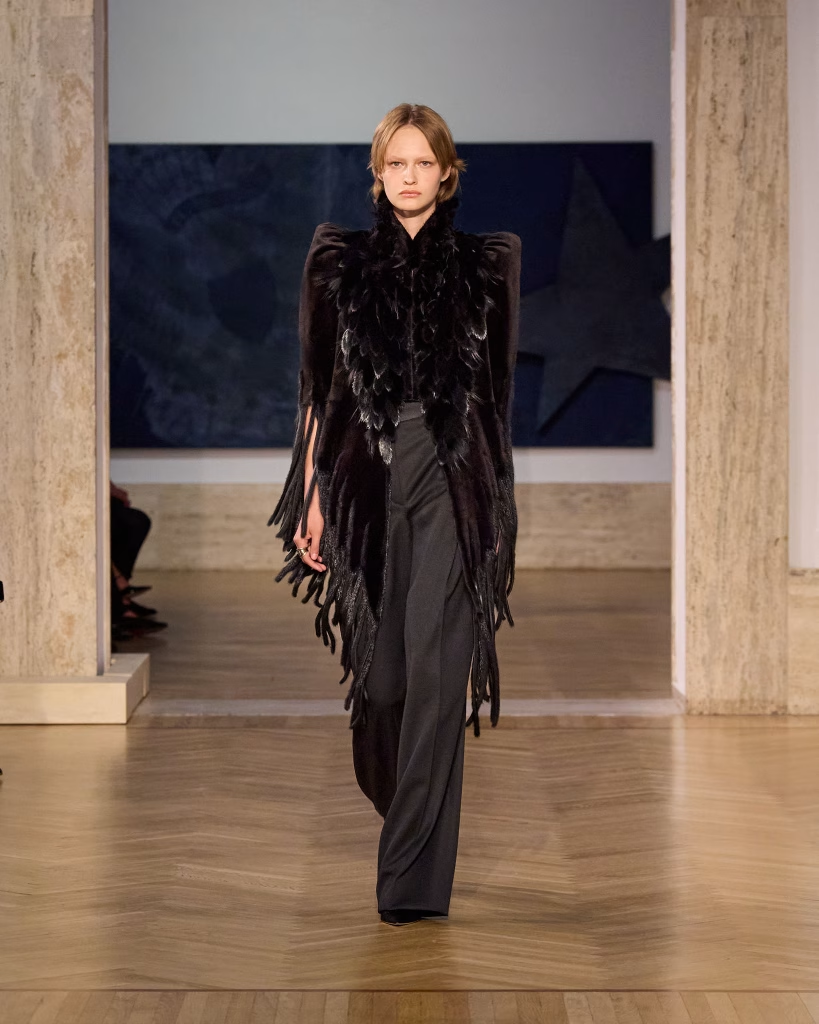
Photo credit: fendi
Kimono-derived jackets and coats appeared in velvet and grain de poudre lined in silk, the kimono influence evident in the cut of the shoulder and the fall of the sleeve rather than in any decorative element, the silhouette borrowed and then remade in the vocabulary of Italian couture rather than reproduced literally. A panne velvet Smoking arrived in the collection’s most overtly tailored moment, the velvet giving the suit a sensual heaviness that the structure of the jacket balanced without eliminating. A mixed media trench in very light cashmere, worked double and left unlined with fur and leather intarsia details at the borders and seams, was the collection’s most technically demanding piece in terms of material combination, the cashmere’s softness and the fur’s density and the leather’s rigidity brought into a single garment without any of the three losing its character. A floor-length coat made from leftover fur and leather scraps assembled into a patchwork of different textures and tones was Chiuri’s most direct statement about the relationship between luxury and waste, the house’s most precious materials repurposed into something new rather than discarded, the scraps of one craft becoming the surface of another.
Photo credit: fendi
The Vienna Secession and the Craft Tradition
The geometric vocabulary that ran through the collection’s embroideries and lace patterns came from a specific historical moment, the Vienna Secession and Bauhaus movements that had produced some of the most rigorous and beautiful design thinking of the early twentieth century, the same tradition that had informed Emilie Flöge’s reform dress practice and that connected the opening look to everything that followed it. Tulle cloaks with Deco arabesques carried the Bauhaus geometry into the most fluid material available to the atelier, the architectural precision of the pattern in direct tension with the transparency and movement of the tulle, and the combination produced something that read simultaneously as structured and entirely weightless. The geometric embroideries that appeared across several dresses and jackets referenced the same visual language without reproducing it literally, the patterns adapted to the specific shapes of the garments and to the behavior of the materials they were worked into, so that the geometry felt native to the clothes rather than applied to them from outside.
Lace appeared throughout in forms that made clear Chiuri’s understanding of the material not as ornament but as construction, the lace acting as the primary structural surface of several pieces rather than as a decorative layer over something else beneath it. The intricacy of the Fendi atelier’s lace work, visible up close in a way that cannot be communicated by photography, was one of the collection’s most significant craft achievements, the patterns so precise and so sustained that they carried the quality of the geometric drawings in the Lagerfeld exhibition upstairs, the same obsessive attention to the logic of a pattern repeated across an entire surface.
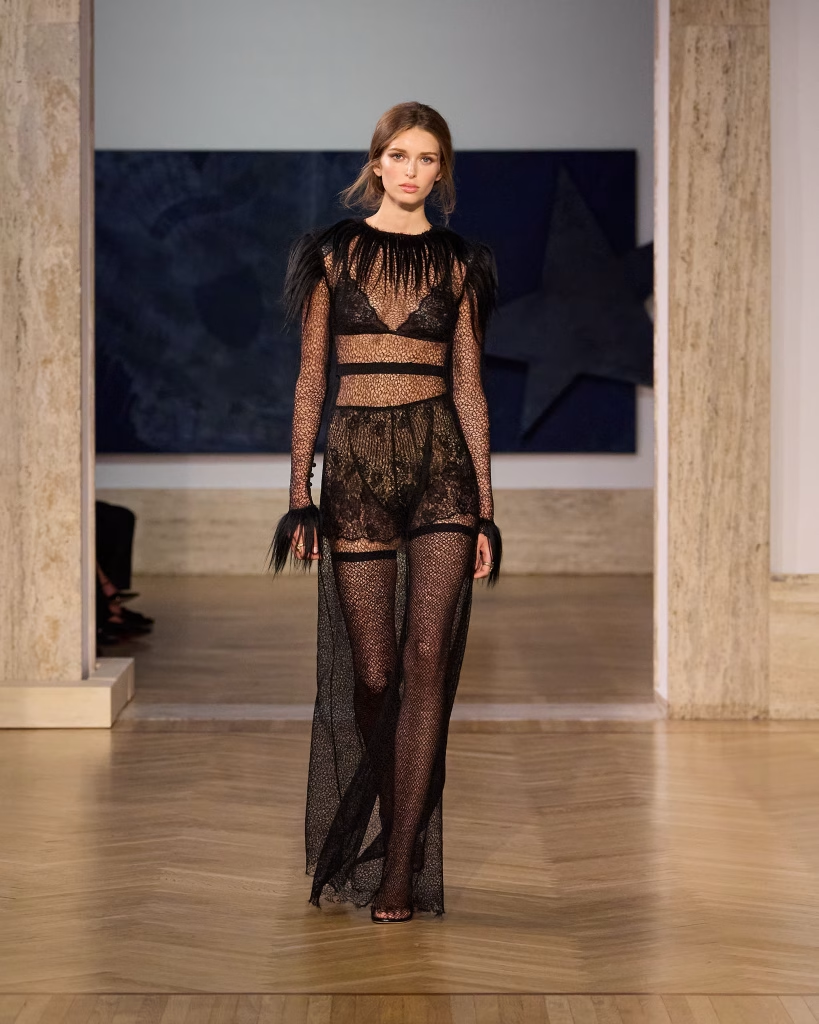
Photo credit: fendi
What the Debut Said
Chiuri described her approach to the collection through the Fendi sisters themselves, women she had known personally from the beginning of her career and who she cited as a point of reference not for what they wore but for how they approached life, contemporary and unnostalgic and entirely of their time in a way she was trying to reflect in the clothes. Where Lagerfeld’s 1980s shapes for the house had been power-shouldered and swaddled and deliberately oversized, Chiuri’s vision was fluid and unwaisted, the silhouettes falling to the mid-calf or ankle in A-line shapes that made no structural demand on the body beneath them, the clothes present without being imposing. The pantsuit in parchment that appeared mid-collection was described as highly representative of the 1970s and of Lagerfeld’s admiration for Marlene Dietrich and for the Fendi sisters themselves, emancipated and free working women, and it carried that reference without requiring the viewer to know it in order to understand what the suit was saying.
The decision not to use fur, despite Fendi’s heritage as a house that built its identity and its couture category on the material, was significant and largely undiscussed in the collection’s press notes but visible throughout in what was and was not present. The fur that appeared in the patchwork coat and the intarsia details was leftover material, scraps repurposed rather than new pelts used, a position on the material that acknowledged its centrality to the house’s history without treating it as the house’s future. This is a difficult line to walk at a house that launched haute couture specifically through what it called haute fourrure, and Chiuri walked it by letting the ateliers’ other skills carry the collection’s ambition while keeping the material present as memory rather than as spectacle.
The Galleria Nazionale was a fitting setting for all of this, a museum that sides with the modern and contemporary in a city overflowing with antiquities, which is exactly where Chiuri positioned the collection. Rome was not a backdrop but an organism in the collection’s logic, its surfaces and stone and travertine and the shadows thrown by its architecture visible in the palette and the textural approach throughout, and the combination of the city, the museum, the Lagerfeld exhibition, and the clothes produced one of the more complete and historically grounded debut presentations of the couture season. The collection was quiet in the way that genuine conviction is often quiet, not announcing itself but simply being what it is, fully and without apology.