
By Gabriela Afanador
Tuesday 9, June 2026
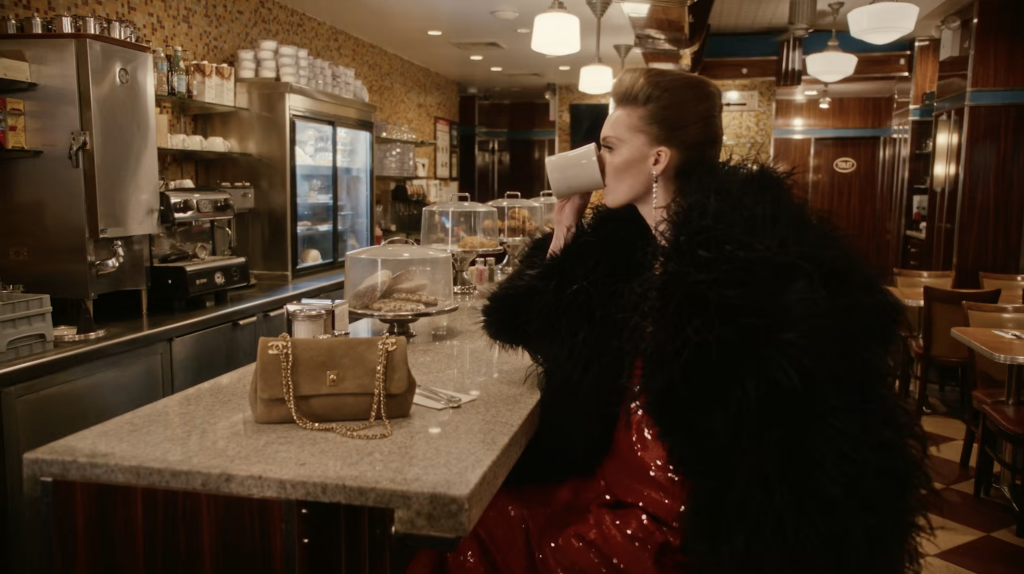
Credit : CHANEL on Youtube
Chanel unveiled its Métiers d’Art NYC campaign on May 25th and 26th, 2026, and the images are immediately recognizable as something different from how the house has typically presented this collection. Photographed by Craig McDean and captured on film by director Rahim Fortune, the campaign was shot entirely on location on the streets of Manhattan, natural daylight, concrete pavements, real city texture, with a cast including Anok Yai, Julia Nobis, Anne Vyalitsyna, Penelope Ternes, Bhavitha Mandava, Josephen Akuei, Jesi Evans, Feng Jiao, and Riley Lusher. The models are moving, mid-stride, through the city rather than posed against a backdrop, which sets the visual tone for everything else the campaign is trying to say. The Métiers d’Art collection itself, established in 2002, exists specifically to celebrate the specialized artisanal workshops united under Chanel’s Paraffection umbrella at the le19M complex in Paris, and each year’s presentation is shaped by the city chosen to host it. New York has been that city before, which makes the differences between this campaign and its predecessors all the more legible.
The contrast with how Chanel has approached the Métiers d’Art campaign before is worth noting. Karl Lagerfeld’s 2018/19 Paris-Egypt version was shot in a dark studio against a black backdrop with models standing in carefully composed stillness, the garments completely removed from any real-world context. The 2026 campaign goes in the opposite direction, placing floor-length gowns and hand-embroidered silk alongside New York sidewalks, baseball caps, and city noise. The gap between the level of craftsmanship in the clothes and the environment they are placed in is very much intentional. Matthieu Blazy’s idea behind the collection is that clothes should function as something a modern woman can actually move through the world in, and the campaign is built around that idea quite literally. New York, specifically, makes sense for this argument because it is a city that demands a certain physicality from the people who live in it, and the campaign captures that demand rather than smoothing over it.
McDean’s photography specifically is doing a lot of the work here. His approach deliberately avoids the artificial lighting and controlled conditions of studio fashion photography, instead letting the natural light of the city do its job, which means the images have a texture and an unpredictability that studio work cannot replicate. The models are not softened or isolated from their environment but placed fully within it, shadows falling where they naturally fall, the city visible and present rather than blurred into abstraction behind them. Rahim Fortune’s film component extends this further, capturing the clothes in actual motion rather than in the frozen poses that print naturally requires, and together the two bodies of work build a more complete picture of what Blazy is proposing than either could achieve alone. The result is that the clothes read differently than they would in a more conventional setting, the hand-embroidered silk and feather-trimmed skirts sitting against the same sidewalks where a woman might actually wear them, which either grounds the luxury in something real or strips it of its remove depending on how you feel about that proposition.
The Clothes and the References
The collection balances the artisanal work of Chanel’s specialized workshops with a visual language that is deliberately more casual and street-facing than previous Métiers d’Art iterations. The embellishments are restrained rather than dense, feather borders by Lemarié on leopard-print petal skirts, intricate needlework by Lesage and Montex on a deep black silk charmeuse gown, and one of the more clever pieces in the lineup, a tailored look that reads as denim but is actually silk woven and dyed to replicate the appearance of it. The decision to use the exceptional technical capability of the le19M ateliers to make something look deliberately ordinary is a very specific kind of provocation, the kind that rewards people who know what they are looking at and means nothing to people who do not, which is itself a statement about the audience Blazy is designing for. The accessories lean into the playful side of the collection, with custom Goossens jewelry featuring hand-hammered animals including deer, hummingbirds, and Dalmatians used as brooches and clasps, alongside a squirrel-shaped version of the classic 2.55 flap bag that has predictably divided opinion.
The superhero references that run through several looks are more considered than they might initially seem. One coat, built in obsidian black, is cut so that it parts with each stride to reveal red-and-white Massaro boots underneath, the reveal timed to movement in a way that clearly nods to Wonder Woman without being a costume. Another look pairs a royal blue knit top with a double-C crest woven into the chest with structured boyish suiting, a combination that reads as a deliberate Clark Kent reference, the idea being someone powerful dressed as an ordinary person. The references work because they are not applied on top of the clothes but built into how the clothes are constructed and worn, which keeps them on the right side of the line between concept and costume. They also connect logically to the campaign’s broader theme of the modern woman as someone who moves through a demanding city with her own kind of power, the superhero metaphor being less about fantasy and more about the specific relationship between what you wear and how you carry yourself.
Among the more talked-about individual pieces is the Popcorn dress, a fully handcrafted showpiece where beads, hand-blown glass, and natural raffia have been worked to look like stray kernels of popcorn caught on a garment after a late-night movie, which is either an extraordinary piece of craft or a very expensive visual pun depending on your perspective, and is probably both simultaneously. It sits alongside enameled red apple minaudières and leather baseball caps as part of a broader group of accessories that treat classic New York imagery as raw material for high-end object making, the kind of gesture that works when the craftsmanship behind it is genuinely exceptional and falls apart when it is not. In this case the workshops involved are Lesage and Goossens, so the foundation is solid even when the concept is deliberately absurd.
What the Campaign Is Saying
The response has been divided, which is not surprising given how much the campaign departs from the traditional Métiers d’Art visual register. Some critics have praised the modernization and the energy it brings to the house, the sense that these are clothes for a woman who actually inhabits a city rather than posing in one. Others have argued that placing the work of ateliers like Lesage and Lemarié against gum-stained sidewalks diminishes what makes those workshops worth celebrating in the first place, that the whole point of the Métiers d’Art framework is to elevate the craftsmanship to a position where its rarity and precision can be fully appreciated, and that a campaign shot on the Lower East Side works against that rather than for it. Both points are reasonable and both are probably partially right, and the tension between them is actually the most interesting thing about the campaign as a document of where Chanel is right now under Blazy’s direction.
What the campaign does clearly communicate is the specific kind of woman Blazy is designing for and the specific kind of luxury he believes the house should be making. Whether that vision fully aligns with what Chanel’s existing clientele wants, or whether it successfully attracts a new generation of clients who find the previous version of the house too removed from their reality, will become clearer as his tenure develops. As a campaign it is coherent, well-executed, and genuinely different from what came before it, which in a landscape where most luxury campaigns are variations on the same formula is already something worth noting.